Hiroyuki Masuyama and James McNeill Whistler in the Kunstforum Ingelheim

April 26 to July 5, 2026
Kunstforum Ingelheim – Old Town Hall
A double exhibition at the Kunstforum Ingelheim unites works by Hiroyuki Masuyama (born 1968 in Tsukuba, Japan, lives in Düsseldorf) and etchings and lithographs by the great American printmaker James McNeill Whistler (1834–1903).
James McNeill Whistler (1834–1903) revolutionized printmaking in the second half of the 19th century with his etchings and lithographs.
The exhibition focuses on Whistler's etchings and lithographs depicting views of London and Venice. Portraits of people from his personal circle, presented as a third theme, reveal the sensitive side of this artist, who was considered eccentric. The diverse range of subjects on display demonstrates the mastery of his unusual techniques.
Whistler's life was marked by numerous travels, which constantly provided him with new subjects to photograph, capturing them in graphic works created on location. After moving from the East Coast of the USA to Paris at the age of 21, he settled in London in 1859. Through his art, he explored the city on the Thames, creating numerous prints until the late 1890s that depicted then-unusual views of the river, its banks and bridges, ships and harbor scenes, as well as people in their everyday lives.
A keen traveler until a year before his death in 1903, Whistler frequently spent extended periods in various European cities and was consequently a well-connected artist. For example, he lived and worked in Venice for over a year in 1879/80. There, he created etchings of the waterfronts of magnificent palaces and typical Venetian bridges, but above all, he focused on motifs of passageways, courtyards, and workshops beyond the usual tourist attractions.
Simultaneously, objects and photographic works by the Japanese artist Hiroyuki Masuyama are on display. His works are often journeys through time, in which the present and the past are superimposed and interwoven.
Masuyama draws a connection to the present. The Japanese artist traveled in Whistler's footsteps to London and Venice.
There, he found the locations where Whistler created his etchings and photographed the current situations: contemporary buildings, vehicles, ships, and people dressed in modern clothing. In these newly created works, Masuyama's contemporary view of these locations is superimposed on Whistler's historical prints. They reveal how significantly, for example, the banks of the Thames have changed in the past 150 years, and how minor the transformation of the Italian lagoon city appears in comparison. As in his earlier works, Masuyama here again visualizes his central theme, which has permeated his artistic output since 1997: the connection between space, time, and change.
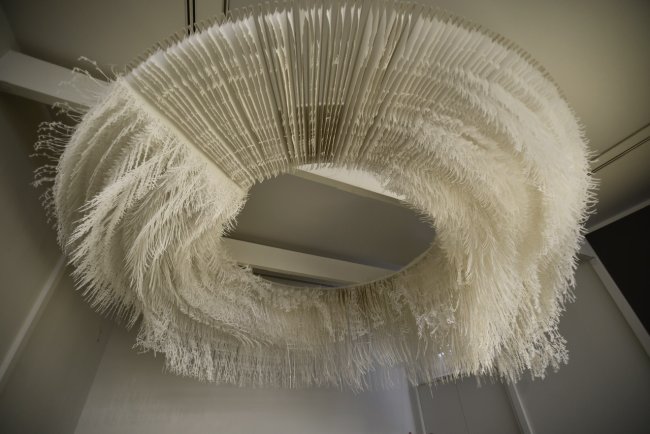
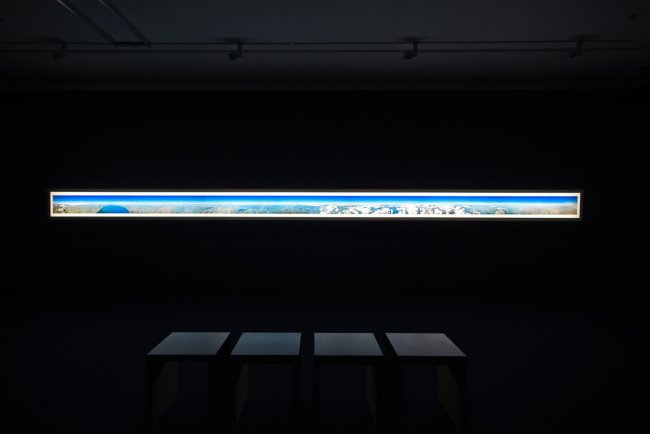
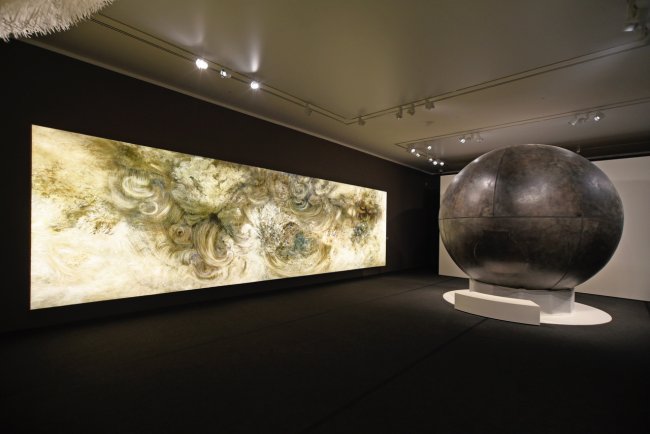
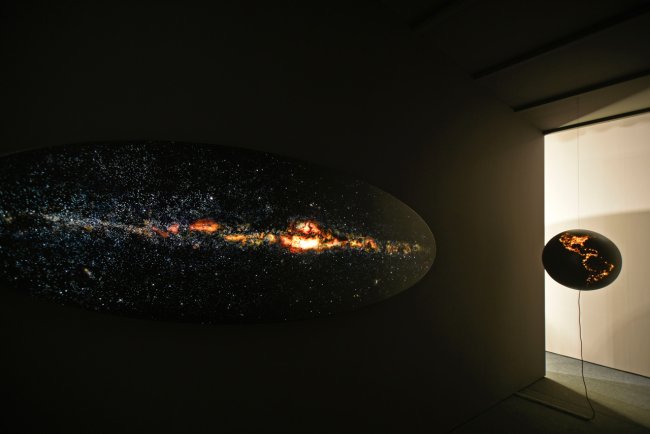
To gain a deeper understanding of Masuyama's artistic practice, a group of earlier works in the basement forms the fourth part of the exhibition: these include highly impressive, sometimes walk-in installations, large-format light boxes, and delicate works on paper. They are united by the idea that every space—whether as small as a patch of lawn or as large as the universe—changes continuously over time, albeit with varying intensity.
The works of both artists are an invitation to a "journey" in which past and present repeatedly touch, blend, complement, and merge into significant historical documents.
Like other Impressionist artists, Whistler also collected Japanese woodblock prints. His intensive engagement with them is evident in the composition of his own works. Selected examples by renowned Japanese woodblock print artists such as Utagawa Hiroshige, Katsushika Hokusai, and Kitagawa Utamaro therefore flank some of his prints.
To provide an art historical context, Whistler's works are juxtaposed with selected prints by some of his British, French, and American contemporaries: The works by Seymour Haden, Frank Short, Édouard Manet, Camille Pissarro, Marcellin Desboutin, and Joseph Pennell illustrate the reciprocal stylistic influences.
(using a text from the Kunstforum Ingelheim)